
Music Production Tutorials
De-Essing Rap Vocals After Compression in Pro Tools
Jun
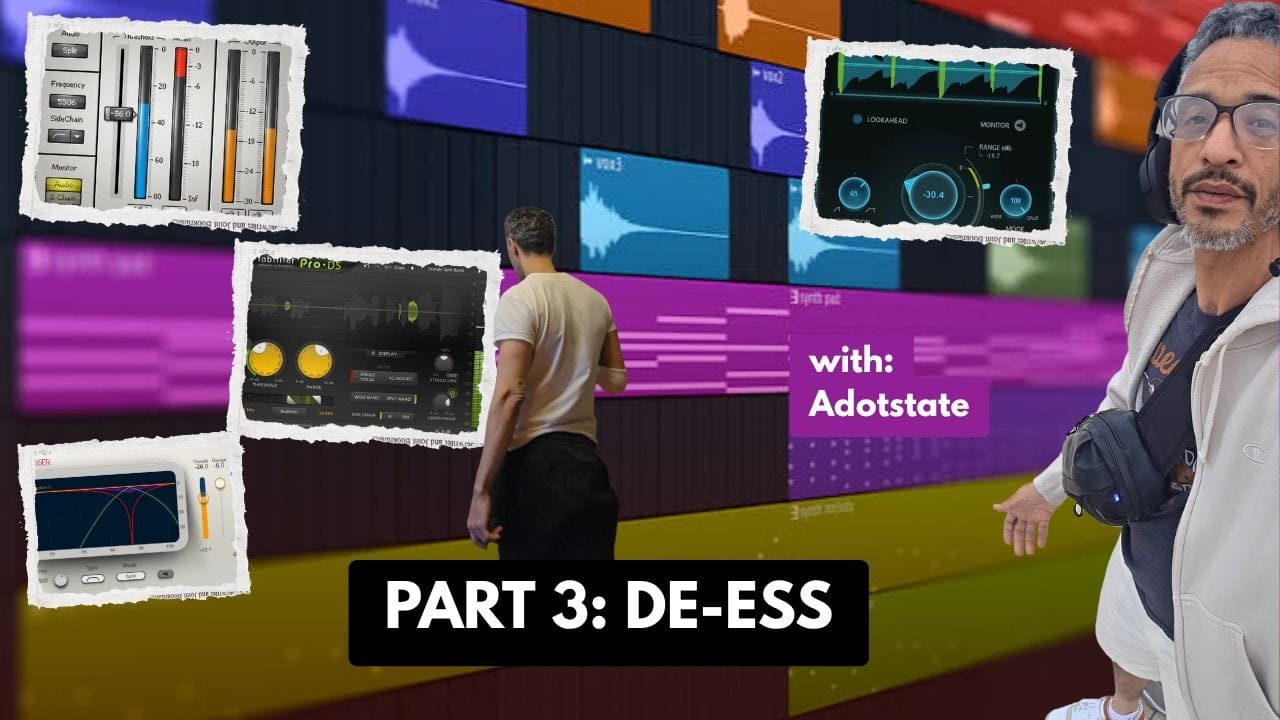
This is Part 3 of my real studio session vocal mixing series. In Part 1, I chose the compressor flavor for the vocal. In Part 2, I shaped the vocal with EQ before the chain. In this video, I start cleaning up the harsh parts that show up after compression.
This session was recorded inside adotstate, a Milwaukee recording studio where I work with artists in real time. This is not a perfect classroom-style tutorial. This is a real session workflow where I am moving fast, listening to the song, and making decisions based on what feels right for the artist’s voice and the beat.
Watch Part 3: De-Essing Rap Vocals After Compression
Real Studio Session Series
This is Part 3 of my vocal mixing series. In Part 1, I chose the compressor flavor. In Part 2, I shaped the vocal with EQ. In this part, I clean up harsh S sounds, T sounds, and high-end problems after compression.
Part 1: Choosing the Right Compressor for Rap Vocals
Part 2: EQ Before Compression for Rap Vocals
Part 3: De-Essing Rap Vocals After Compression
Part 4: Reverb & Delay Sends for Rap Vocals
Part 5: Vocal Cleanup & Quick Mastering
What This Video Covers
In Part 3, I move from shaping the vocal into cleaning the vocal. After compression and EQ, certain harsh sounds can start to stand out more. That might be sharp S sounds, T sounds, high-end buildup, or little parts of the vocal that feel too aggressive.
The goal is not to make the vocal dull. The goal is to smooth out the sharp parts while keeping the vocal bright, clear, and upfront in the beat.
Why De-Essing Matters After Compression
Compression can bring a vocal forward, but it can also bring forward problems. When a compressor controls the loud parts of the vocal, the S sounds, T sounds, and high-end details can become more noticeable.
That is why de-essing is an important part of the chain. It helps control the sharp parts without turning the whole vocal down.
Shaping Before Compression vs Cleaning After Compression
In the earlier parts of the series, I was shaping the vocal before it went deeper into the chain. In this part, I am cleaning up after the compressor.
That is a big difference. Before compression, I am trying to shape the tone going into the chain. After compression, I am listening for what the chain brought out and cleaning up anything that feels too harsh.
Listening for Harsh T’s and S’s
In this part of the session, I start hearing a harsh sound in the vocal. Instead of ignoring it, I stop and look for where it is coming from.
Sometimes the problem is not the whole vocal. It might just be one area of the high end. It might be one word. It might be a T sound or an S sound that keeps cutting through too hard.
That is why I listen closely before reaching for a plugin. I want to fix the problem without damaging the rest of the vocal.
Using FabFilter Pro-DS
One of the de-essers I try in this video is FabFilter Pro-DS. I use it to find the harsh area and soften it up so the vocal sits smoother in the mix.
The important part is auditioning what the de-esser is grabbing. If the de-esser is grabbing the wrong area, it can make the vocal sound strange, dull, or lispy. If it grabs the right area, it can smooth the vocal without making it lose energy.
Trying Different De-Essers
Just like compressors and EQs, different de-essers can react differently. In the video, I try different options and listen to which one controls the harshness the best.
Sometimes one de-esser feels smoother. Sometimes another one grabs the S sounds better. The point is to listen and pick the tool that works for that vocal.
Cleaning the Vocal Without Killing the High End
One of the hardest parts of de-essing rap vocals is keeping the vocal bright without making it painful. If you leave too much high end, the vocal can sound sharp. If you take away too much, the vocal can sound dull or lifeless.
That is why I try to keep the vocal sitting around the brightness of the beat and hi-hats. I want the vocal to cut through, but I do not want the S sounds to jump out in a distracting way.
Making the Vocal Louder Without Just Raising the Fader
After cleaning the harshness, I also work on getting the vocal to feel louder in the chain. Instead of just turning up the track volume, I use EQ and cleanup moves to bring out what I want from the vocal.
This helps the vocal feel more present without simply pushing the whole thing louder and creating new problems.
Plugins Mentioned in the Video
- FabFilter Pro-DS
- FabFilter Pro-Q
- Waves Sibilance-style de-essing
- ROX vocal compression
- Post-compression EQ cleanup
What Comes Next in Part 4
After de-essing and cleaning the vocal, the next step is adding space. In Part 4, I move into reverb, delay, and vocal effects to make the vocal feel wider, deeper, and more 3D.
Part 4: Reverb & Delay Sends for Rap Vocals
Need Studio Time in Milwaukee?
If you are an artist in Milwaukee or nearby and you want to record your song, you can book studio time at adotstate.
Bring your beat, record your vocals, and leave with your song when the session is done.
