
Music Production Tutorials
Reverb & Delay Sends for Rap Vocals | Real Studio Session Part 4
Jun
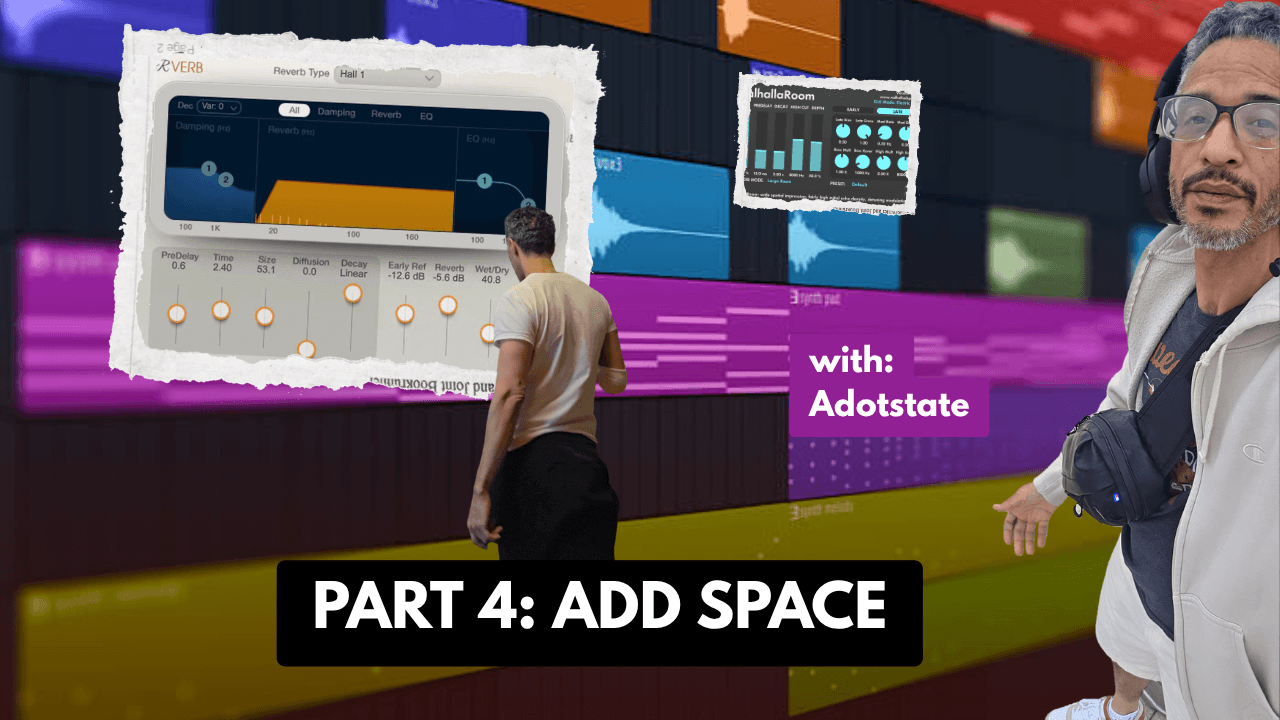
This is Part 4 of my real studio session vocal mixing series. In Part 1, I chose the compressor flavor for the vocal. In Part 2, I shaped the vocal with EQ. In Part 3, I cleaned up harsh S sounds, T sounds, and high-end problems after compression. In this video, I start adding space around the vocal with reverb and delay.
This session was recorded inside adotstate, a Milwaukee recording studio where I work with artists in real time. This is not a perfect classroom-style tutorial. This is a real session workflow where I am moving fast, listening to the song, and making decisions based on what feels right for the artist’s voice and the beat.
Watch Part 4: Reverb and Delay Sends for Rap Vocals
Real Studio Session Series
This is Part 4 of my vocal mixing series. In Part 1, I chose the compressor flavor. In Part 2, I shaped the vocal with EQ. In Part 3, I cleaned up harsh S and T sounds. In this part, I add reverb, delay, and space around the vocal.
Part 1: Choosing the Right Compressor for Rap Vocals
Part 2: EQ Before Compression for Rap Vocals
Part 3: De-Essing Rap Vocals After Compression
Part 4: Reverb and Delay Sends for Rap Vocals
Part 5: Vocal Cleanup and Quick Mastering
What This Video Covers
In Part 4, I move from cleaning the vocal into adding space. After the compressor, EQ, and de-essing are working together, the vocal needs reverb and delay so it does not feel completely dry or flat.
The goal is not to drown the vocal in effects. The goal is to add depth, width, and movement while keeping the vocal upfront in the beat.
Why Reverb and Delay Matter on Rap Vocals
Rap vocals usually need to stay clear and in front. If the reverb is too loud, the vocal can get washed out. If the vocal is too dry, it can feel disconnected from the beat.
That is why I listen for balance. I want the vocal to have space around it, but I still want every word to cut through.
Adding Plate Reverb
In this part of the session, I start checking reverbs and listening to how the vocal reacts. A plate reverb can add a smooth tail and help the vocal feel bigger without completely pushing it to the back.
I turn the effect up enough to hear what it is doing, then back it down until it feels like it belongs in the song.
Using Room Reverb for Another Layer
I also try room reverb to give the vocal a different type of space. A room sound can make the vocal feel like it is sitting in an environment instead of floating on top of the beat.
Sometimes the room does not need to be loud. It can just be a small layer that helps the vocal feel more natural and more connected.
Delay Sends and Vocal Movement
Delay is another way to give the vocal space without using too much reverb. A delay can create movement, bounce, and rhythm around the vocal.
The important thing is blending it so it adds flavor without distracting from the main performance. In a real session, I am listening for what supports the song, not just adding effects because they are there.
The “Pot” Idea: Effects Before and After the Chain
One of the main ideas in this video is that not every effect has to come after the main vocal chain. I explain the chain like a pot of food. Some things go into the pot, and some things can happen after the pot.
When I send effects before the main chain, the reverb or delay can respond more to the original vocal performance. That means the louder, more expressive parts of the raw vocal can hit the effect differently.
When I send effects after the chain, the effect is reacting to the more controlled version of the vocal. Both approaches can work. They just create different layers.
Making the Vocal Feel More 3D
The reason I like using different effect layers is because it can make the vocal feel more 3D. One reverb might add width. Another might add depth. A delay might add movement. Together, they can help the vocal feel bigger without making it messy.
The trick is keeping everything balanced. If the effects get too loud, the vocal loses focus. If the effects are too low, the vocal might still feel dry.
Keeping the Vocal Upfront
Even with reverb and delay, the vocal still has to stay upfront. That is especially important for rap vocals because the words and delivery are the main focus.
I am listening for the point where the effects support the vocal but do not take over the mix.
Plugins and Techniques Mentioned in the Video
- Plate reverb
- Room reverb
- Delay sends
- Vocal effect sends in Pro Tools
- Sending effects before the main chain
- Sending effects after the main chain
- Blending effects for space and depth
What Comes Next in Part 5
After adding reverb, delay, and space, the next step is cleaning up the vocal regions and finishing the rough copy. In Part 5, I move into breaths, mouth noises, vocal cleanup, and quick mastering.
Part 5: Vocal Cleanup and Quick Mastering
Need Studio Time in Milwaukee?
If you are an artist in Milwaukee or nearby and you want to record your song, you can book studio time at adotstate.
Bring your beat, record your vocals, and leave with your song when the session is done.
